
Antique Wall Murals









How to Choose Antique Wallpaper by Design
Not every antique wallpaper works the same way on a wall. Some designs depend on one large scene, while others can lose part of the image behind furniture without looking unfinished.
-
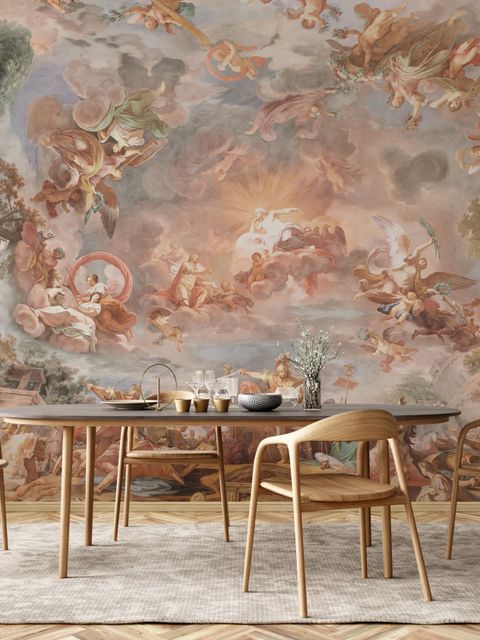
Frescoes and classical scenes: look at the position of faces, statues, arches, and columns before choosing the crop. These details are often the reason the design works.
-
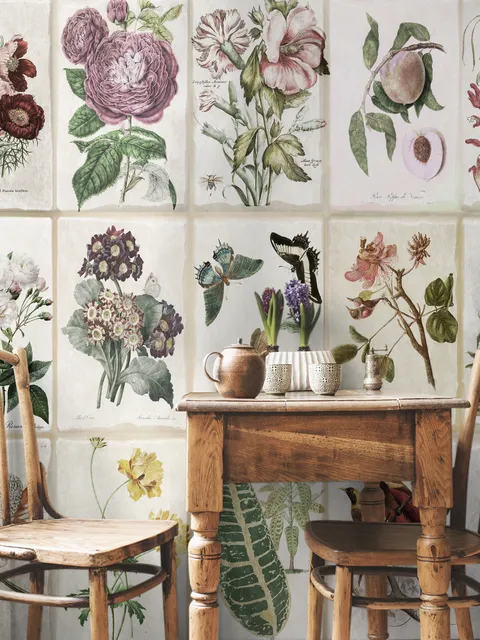
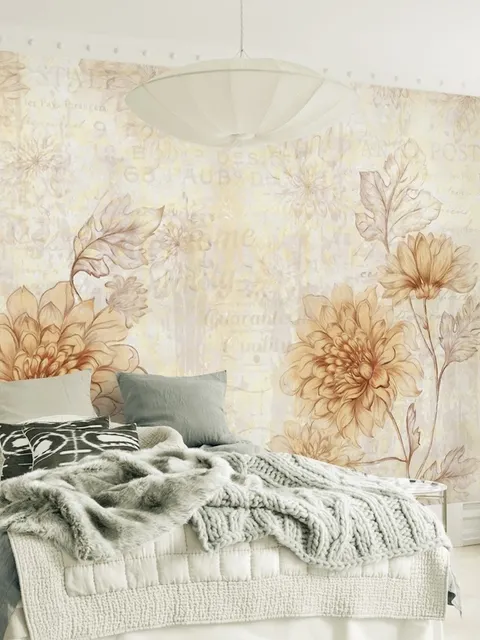
Botanical and chinoiserie designs: easier around beds, consoles, and other furniture because flowers and branches continue across the image.
-
Antique scenic wallpaper: give landscapes and panoramic views enough horizontal space. A narrow wall can cut away too much of the scene.
-
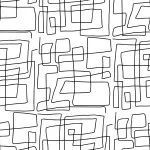
Antique pattern wallpaper: useful where doors, shelving, or furniture divide the wall into smaller sections.
For antique wall murals, check the complete image before ordering. A close-up can look great while the full composition may place the main detail exactly where your furniture will cover it.
Antique Wallpaper Colors, Finishes, and Details
Antique style wallpaper is not always dark or brown. Many designs use faded blue, dusty green, cream, muted red, or soft sepia. In a room with weak daylight, a pale background keeps the artwork easier to see; deeper colors suit a wall where you want the mural to carry more of the room.
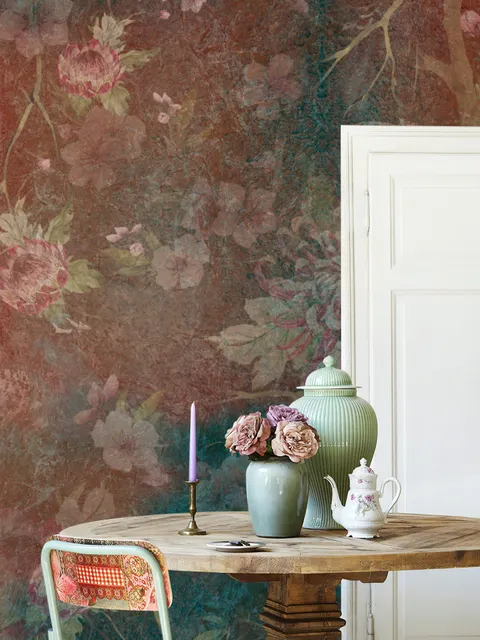
The aged effect also varies. Some antique looking wallpaper uses worn plaster, faded paper, cracked-paint details, or tapestry texture. Others keep the historical artwork quite clean. The second option usually sits more easily with modern furniture, while a heavily weathered finish gives the wall a stronger old-world look.
Frequently Asked Questions
Antique wallpaper murals create one larger composition, such as a fresco, landscape, or historical scene. Patterned wallpaper repeats the same motif across the wall.
Bedrooms, living rooms, dining rooms, studies, and entryways all work. More important is having enough visible wall for the main part of the artwork to stay clear.
Yes, especially with very dark or busy artwork. A lighter background, softer contrast, and fewer dense details are easier to use in a smaller space.
Keep nearby patterns fairly simple and repeat one or two colors from the mural in textiles or furniture. Warm, indirect lighting usually suits antique wallpaper murals better than harsh light aimed straight at the wall.